
From 'The Vampire' to Today's Gothic Revival
An exploration of how John Polidori’s The Vampyre transformed folklore into the modern literary vampire and helped spark the enduring evolution of Gothic fiction.
RHAPSODIESWRITING
S.C. Farrow
2/15/20265 min read
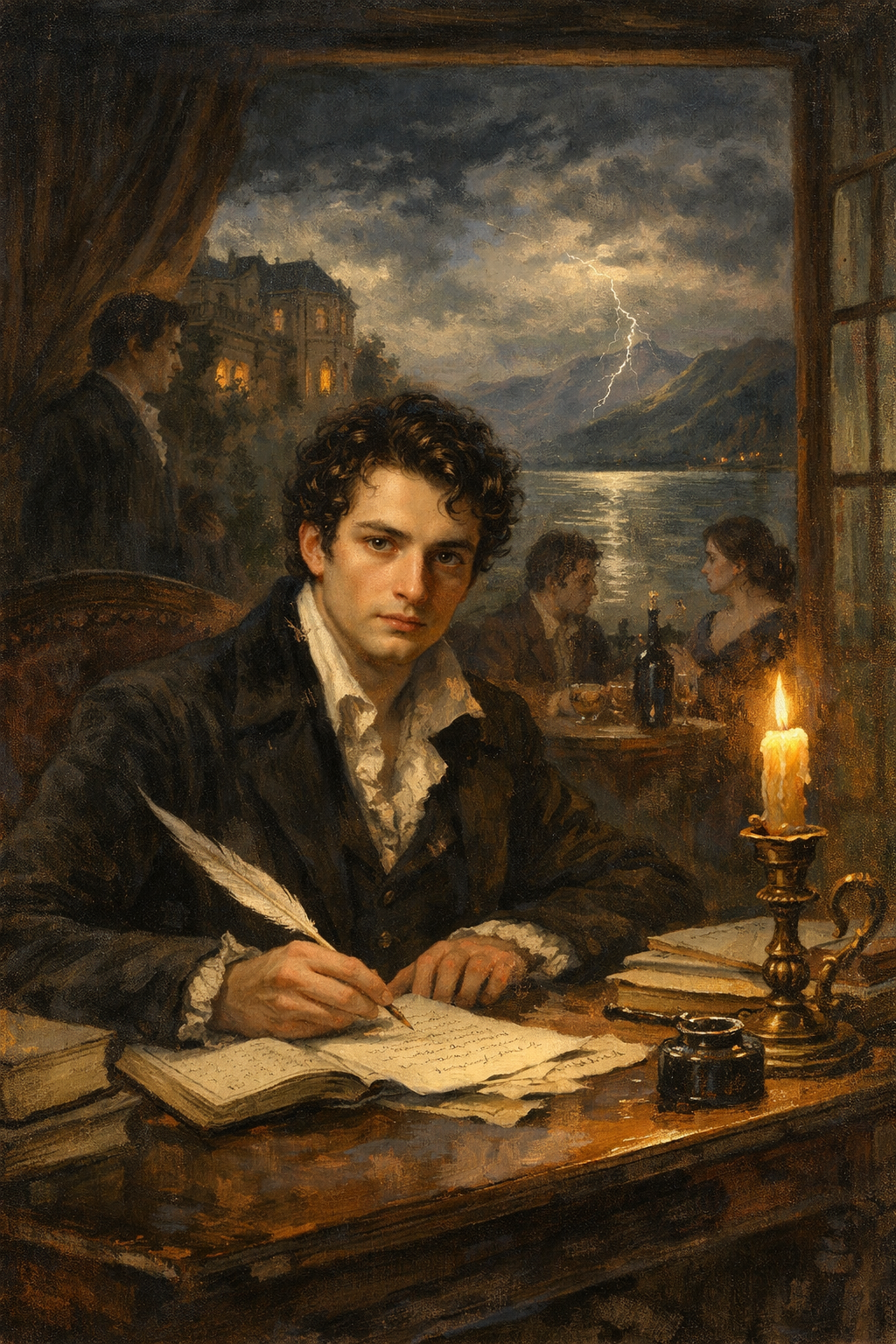
What can I say? I love Gothic fiction – of all subgenres. However, I have to admit that I have a penchant for vampire fiction. But how did vampire fiction evolve? Let’s take a look at the evolution of this seductive and often bloody subgenre of Gothic fiction…
BLOODY BEGINNINGS
The Castle of Otranto by Horace Walpole, published in 1764, marked the beginning of Gothic literature as a genre. Throughout the centuries, Gothic fiction has not only endured, but it has also continually evolved into distinct subgenres such as Victorian Gothic, Southern Gothic, Psychological Gothic, Eco-Gothic, and Gothic Horror, which of course, includes Gothic vampire fiction. And, as we know, Gothic vampire fiction is one of the most durable expressions of Gothic concerns expressing elements of death, desire, power, the body, immortality, and social predation.
From the poetic, folkloric, proto-gothic stories such as Der Vampir, a poem written by Heinrich August Ossenfelder in 1748, to modern works such as the movies Sinners and Violent Ends, Gothic fiction continues to be hot content.
BIRTH OF THE MODERN VAMPIRE
My own love of the Gothic genre began with Wuthering Heights, the classic Emily Bronte novel that has recently been adapted (yet again) into a film by writer/director Emerald Fennell. A lot of people dislike Wuthering Heights because of its toxic characters and themes of love as obsession, revenge, generational trauma, class, destructive masculinity and power, etc.
However, I’m fascinated by these themes and have recently incorporated them into one of my own Gothic genre projects inspired by events that took place at the Villa Diodati in 1816. I can’t tell you about that yet, other than to say it’s a very exiting film project 🤫 However, what I can tell you is that during that summer in 1816, in a lavish summer house in Switzerland, overlooking the magnificent Lake Geneva, the modern Gothic vampire was born.
The word “vampire” itself entered Western European awareness in the early 1700s, but belief in such creatures is much older and widespread and can be traced to Slavic regions, Greece, Romania, the Balkans, and parts of Germany. These creatures whispered about in these folklores weren’t suave aristocrats, they were revenants. Dead villagers returning to harm the living, spread disease, drain vitality, or torment family members.
Typical folklore traits were very different from the later literary vampire:
bloated or decaying bodies
associated with plague and improper burial
tied to superstition, religion, and community panic
destroyed through staking, burning, or exhumation rituals
What changed in the late 18th–early 19th century was literacy and the Gothic movement. People began writing folklore down. It was aestheticised and psychologically reframed.
THE BYRON CONNECTION
Most people associate the early literary vampire with Lord George Gordon Byron, the infamous celebrity poet who fled his native England amid a series of scandals including incest, bisexuality, and divorce. Byron did write about vampires – in a poem titled The Giaour and in a Fragment of a Novel, which remained unfinished. However, Byron is not the subgenre’s creator. That honour goes to Doctor John William Polidori, a brilliant young man of twenty who was Byron’s travelling companion and personal physician.
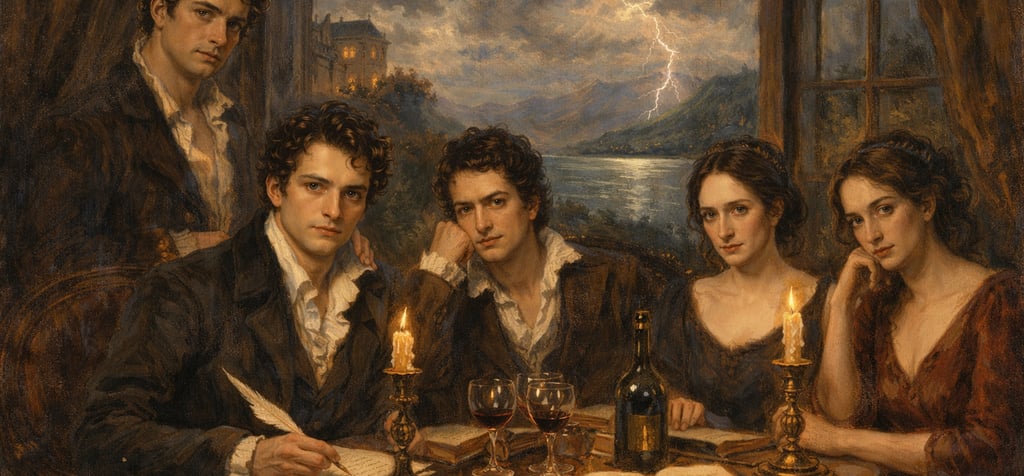
While staying at the Villa Diodati for the summer, Byron and Polidori met Mary Godwin (soon to be Mary Shelley), the poet Percy Shelley, and Mary’s half-sister, Claire Clairmont. The weather at the time was not merely inclement, it was biblical, with raging storms that continued for several days preventing the group from leaving the house.
It was there, in that simmering cauldron of isolation, abundant wine, mind-bending substances, inflated egos, and intellectual rivalry, these five young gifted, beautiful, and sexually provocative young people challenged each other to write a ghost story.
Mary’s Godwin’s Frankenstein was born here. The novel wasn’t written here, but the concept was most certainly conceived here, as was another ground-breaking “monster” common to the Gothic genre – the aristocratic vampire – which, of course, became the template for all modern vampires to follow.
LITERARY PEDIGREE
Of the five members of the Diodati group, Polidori was an outsider. Byron and Shelley were both members of the aristocracy. Mary and Claire were born to literary royalty. Their father was the radical philosopher William Godwin, and Mary’s mother was the legendary Mary Wollstonecraft, a pioneering English writer and philosopher widely regarded as one of feminism’s founding thinkers.
Polidori was a physician. He’d studied medicine at the University of Edinburgh but hated medicine. He’d only studied there at the insistence of his father. Polidori wanted to be a writer. His ambition was so great, he believed that being in close proximity to Byron and Shelley would help improve his skills as a writer and progress his literary career.
As part of that competition, Polidori began work on his novel titled Ernestus Brechtold: Or, the Modern Oedipus. It wasn’t until after he was dismissed from Byron’s service that he went on to pen The Vampyre.
Emotionally wounded by the treatment he received in Byron’s service, Polidori “borrowed” from Byron’s unfinished fragment of text in order to exorcise the whole Villa Diodati experience from his heart and mind. His breakthrough in writing The Vampyre didn’t come from inventing the creature itself, it came from relocating the vampire from the graveyard to the drawing room – from turning peasant terror into aristocratic threat. The monster was no longer a creature of the grave. On the contrary, it became socially mobile and psychologically manipulative.
THE AUTHORSHIP CONTROVERSY
It seems Polidori had little to no intention of pursuing publication when he entrusted his completed manuscript to a friend. Unbeknownst to him, the manuscript moved through intermediaries until it ended up with the editor of the Monthly Magazine who presumed Lord Byron had written it and published it under Byron’s name. Polidori had lost control of his work and his writing career and reputation were irrevocably damaged. Both The Vampyre and Ernestus Brechtold were eventually published in his name. Polidori went on to write poetry, drama, and other prose; however, nothing he wrote after Ernestus Brechtold and The Vampyre matched their success.
CLOSING REFLECTION
Polidori didn’t just write a “vampire” story, he defined a genre. Without him, there would be no aristocratic vampire lineage. The Gothic canon loudly remembers Byron, Shelley, and Mary Shelley, but Polidori, the brilliant young man who quietly shaped the ‘other’ myth that was created that night, has largely been forgotten or cruelly ignored.
We are currently in another cycle where Gothic fiction is being reinterpreted rather than just remade. It’s more psychological, more sensual, more morally grey. Polidori’s The Vampyre sits at the root of this revival. It sits at the root of every Gothic revival.
“New wave” vampire media lists (2024–2026) show a clear resurgence of gothic themes across film and TV, particularly around aristocratic vampires and Shelley-inspired science horror.
The modern wave isn’t just capes and candlelight, it’s interiority, desire, power, identity, and moral ambiguity. That’s classic Gothic territory, just expressed through contemporary sensibilities. The Vampyre wasn’t just a monster story either. It was about charisma, class, seduction, and social danger. After decades of relatively surface-level horror, the current resurgence of Gothic fiction, and specifically vampire fiction, is returning to that psychological core.
As you can see, readers and viewers have been fascinated with vampires ever since Doctor John Polidori brought them out of the shadows and into society. Gothic fiction never dies; it simply adapts as each generation writes its own fears into it.
And now that I’ve paid tribute to Doctor John Polidori, the brilliant young creator of this Gothic subgenre, I’m off to write my new novel about – you guessed it – a vampire!
Gothic genre
Vampires
John polidori
© 2026. All rights reserved
In the spirit of reconciliation, we acknowledge the Traditional Custodians of Country throughout Australia and the Torres Strait Islands and their connections to land, sea, and community. We pay our respects to elders past and present and extend that respect to all First Nations and Torres Strait Islander peoples today.
ABN: 19 569 432 238